Repeated summaries hid the differences.
Separate the service explanations and organise them around owner questions.
See the content journeyVictorian Restorations / AI-assisted delivery
AI can produce a website. The harder work is knowing what that website needs to do. I used research, analysis and hands-on judgment to turn an existing heritage specialist’s offer into a coherent digital experience, then directed AI-assisted delivery across content, imagery and interaction.
Explore the work
Research to working experience

01 / The challenge
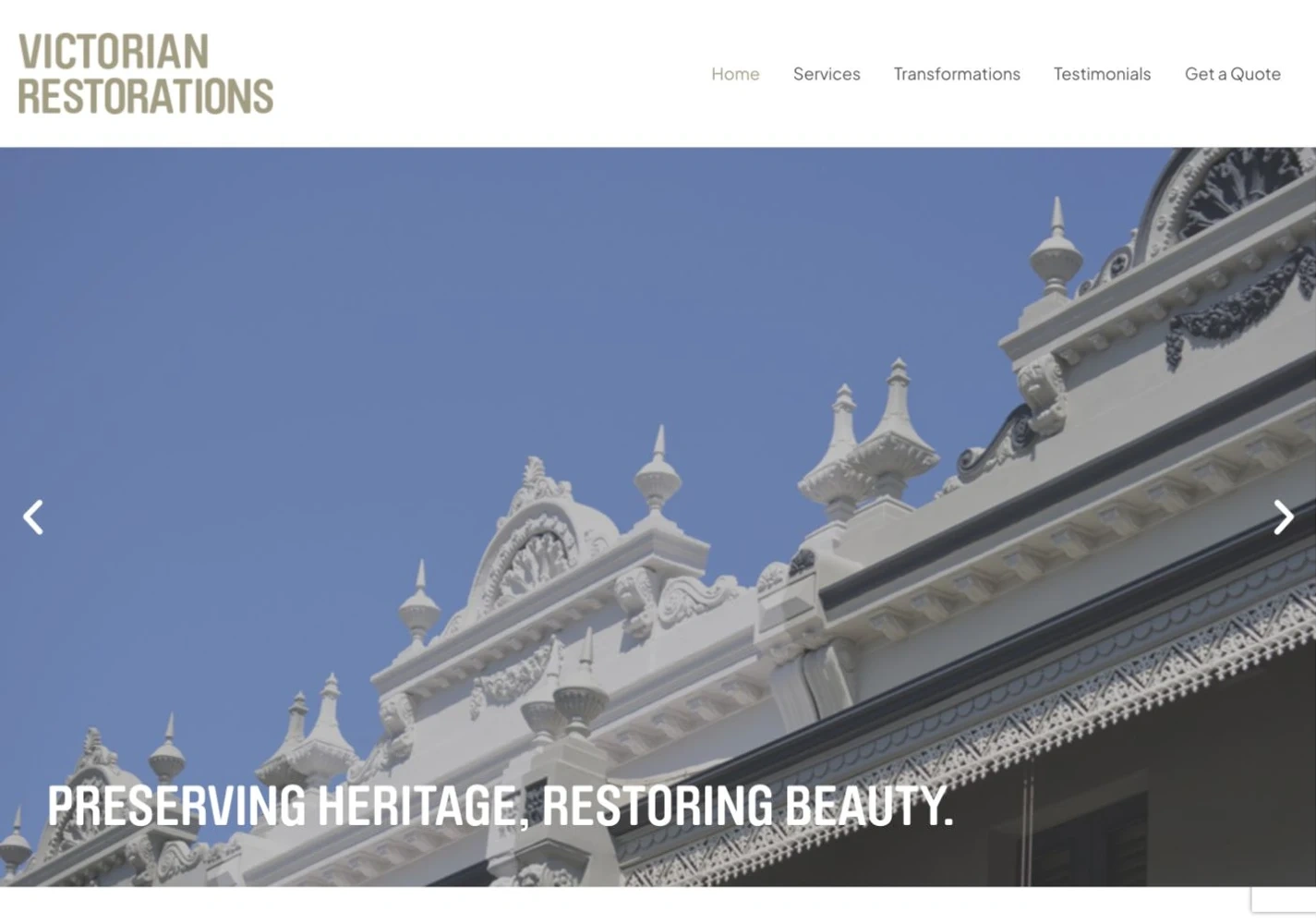
The original site contained the raw material: specialist services, architectural photographs and a substantial collection of client notes. But its service summaries repeated copy, and the visitor had to work through a general introduction to understand the different kinds of help available.
The opportunity was more than a visual refresh. A property owner needs to recognise a problem, understand what can be assessed and see the details that make a period facade worth preserving. The business needs that interest to lead towards a relevant assessment enquiry, whether the visitor starts on the homepage, a service or a guide.
Make the expertise easier to recognise, without turning a specialist trade into generic luxury marketing.
02 / My contribution
Reviewed the existing offer, content and architecture. Checked technical explanations against heritage guidance. The working audience hypothesis was practical: owners need to understand what is wrong, what is worth keeping and how to begin.
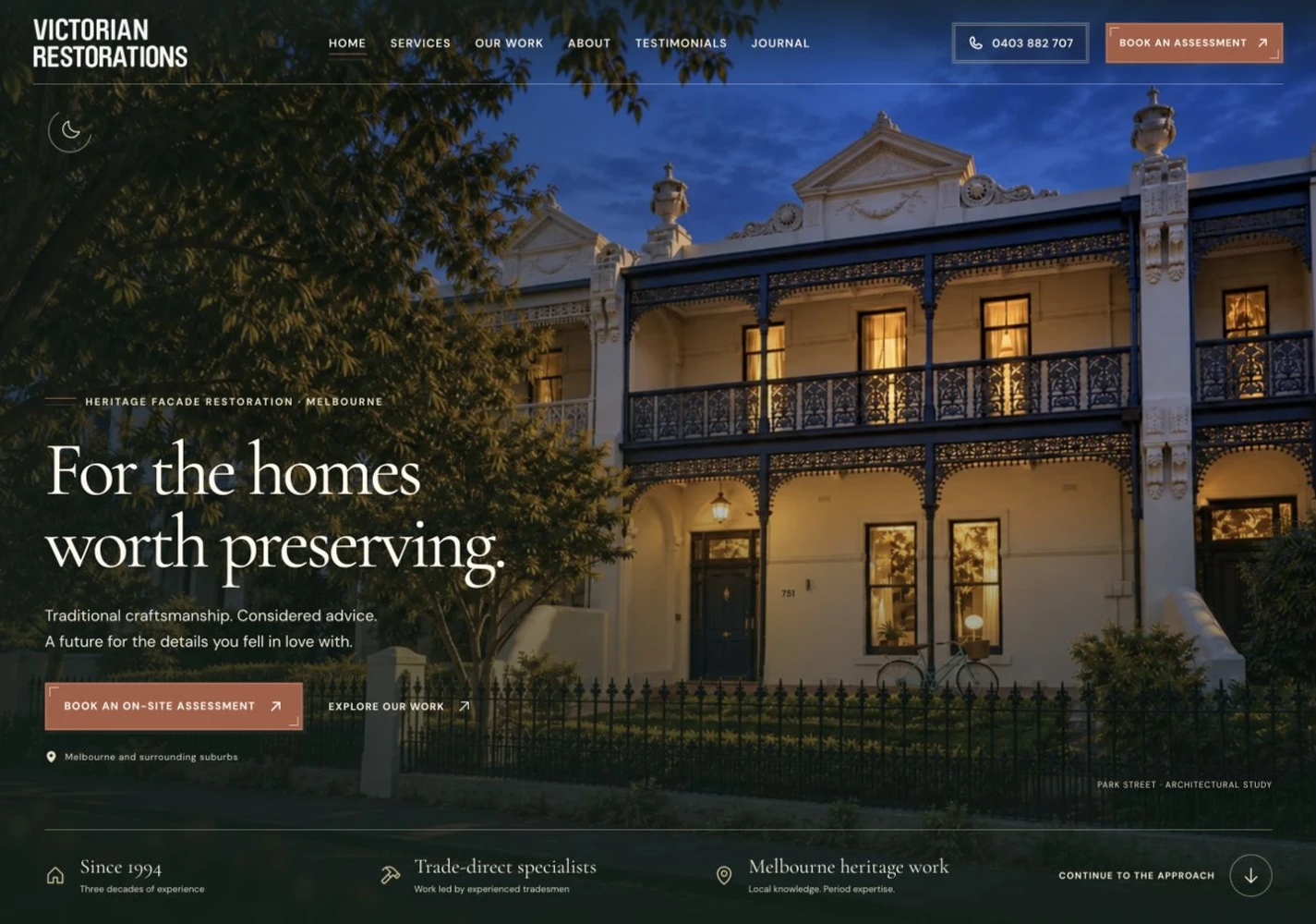
Connected the business’s subject to the experience: a facade at full scale, an architectural visual language and plain-language answers. Organised the journey from recognising a concern to exploring relevant work and starting an enquiry. The commercial purpose shaped the content and calls to action.
Directed AI-assisted content, imagery, interface implementation and interaction work. Broke broad intentions into specific requirements, then tested whether the output served the intended experience. The role was to connect the disciplines, not simply request a finished page.
Used browser previews, responsive checks and source-level audits to review the experience beyond a desktop still. Recomposed the hero for phones and portrait tablets instead of shrinking the desktop: adjusted image crops, type scale and spacing, kept the assessment invitation prominent, and moved supporting information below it. Adapted hover behaviour for touch and checked the lighting hold through scroll and reverse. Captured the resulting rules in a design system for future work.
The analytical thread
Separate the service explanations and organise them around owner questions.
See the content journeyMake it the experience: full-scale imagery, changing light and details carried into the interface.
See the visual languageReview the experience in motion and at different widths, then refine pacing, spacing and control behaviour.
Try the interaction studiesThis was a research-led redesign demonstration, not an analytics experiment. The evidence was the existing site, technical guidance, the working implementation and its checks. Visitor behaviour and commercial impact remain questions for a future live evaluation.
The opening / Before and after
03 / Inside the experience
Explore how architectural character, responsive layouts and useful content work together. The deeper story follows the homeowner’s journey from first impression to an assessment invitation.
Explore the design story
04 / What the work demonstrates
Working scope
The redesign demonstration includes service pages, architectural studies, client notes, Journal articles and the public brand reference.
Editorial structure
Distinct service explanations and image-led architectural studies provide more than a single polished homepage.
Reusable authority
Public guidance and human/AI references preserve decisions about identity, content, photography and interaction.
The result demonstrates a transferable capability: connect research to a clear brief, turn that brief into working experiences with AI, and evaluate what comes back. The analytical habit is the same as in measurement work: define the question, examine the evidence, make a decision and check the result.
These counts describe delivered scope, not revenue, conversion or ranking improvements. The next live evaluation would measure relevant service visits, assessment-start and completion rates, and enquiry quality, compared across device types and entry pages. This is an independent demonstration, not the business’s launched website; no performance uplift is claimed.
A related challenge?
For conversations about measurement, applied AI and digital experiences that help people act.
Start a conversation